The full Urban Storytellers Journal in English, German and Bulgarian is now available to read and download here.
Ein Kiosk, der nicht verkauft, sondern teilt: So begann das Projekt Sharing to Empower. Es fragte, wie neu angekommene Menschen aus der Ukraine in Berlin Formen des Teilens erproben – und wie daraus in einer neuen Stadt Praktiken entstehen können, die Halt geben, Gemeinschaft schaffen und das Umfeld mitgestalten.
Was brauchen junge Menschen an den Orten, an denen sie leben, lernen, arbeiten und ihre Freizeit verbringen – und wie können wir sie in die Gestaltung der Stadt einbeziehen? Um diese Frage zu beleuchten, sprach die öffentliche Designerin und Stadtprojektmanagerin Katya Romanova mit zwei lokalen Jugendinstitutionen in Berlin-Pankow: dem Kinder- und Jugendbüro Pankow und Gangway e.V. Gemeinsam teilen sie Einblicke, Erfahrungen und Strategien, um die Stadtplanung inklusiver zu gestalten und besser auf die Bedürfnisse junger Menschen einzugehen.
What do young people need in the places where they live, study, work, and spend their free time — and how can we involve them in shaping the city? We spoke with two local youth institutions in Berlin-Pankow: Kinder- und Jugendbüro Pankow and Gangway e.V. about insights, experiences, and strategies for making urban planning more inclusive and responsive to the needs of young people.
„Finding Home“ ist eine Klanginstallation, die fragt: Was bedeutet „Zuhause“ für junge Menschen mit Migrationshintergrund?
“Finding Home” is a sound installation that asks: What does “home” mean for young people with migration backgrounds?
Dieses partizipative Projekt von Ksenia Lapina und Maria Fallada Llandrich untersucht Jugendidentität, Zugehörigkeitsgefühl und die imaginativen, hoffnungsvollen Zukunftsvorstellungen junger Menschen in Berlin und Sofia.
This participatory project explores youth identity, sense of belonging, and the imaginative, hopeful futures envisioned by young people in Berlin and Sofia.
Während der Sommerresidenz der Urban Storytelling School sprachen wir mit Vladiya Mihaylova von Toplocentrala – Leiterin der Sparte Bildende Kunst im neuen Kunstzentrum in Sofia, das unabhängiger Kunst, Performance und Gemeinschaftsengagement eine Plattform bietet. Das Gespräch behandelt städtischen Wandel, demokratische Prozesse, junge Menschen und das Verhältnis zwischen Kunst, Gemeinschaft und öffentlichem Leben.
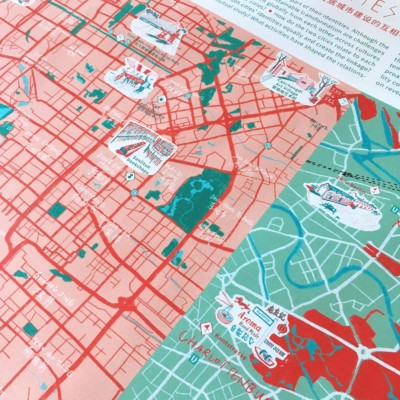
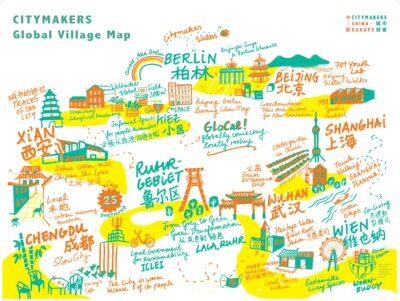
Be it in China or Europe, the ability to create communities (both spatial and social) is the ‘currency’ that lies at the heart of livable cities. Five years after the development of the CITYMAKERS China-Europe program, an ecosystem of places and spaces for the exchange and testing of new models of livable cities has emerged across cultural, disciplinary and national boundaries.The Global Village Map shows this ecosystem – a snapshot of projects, places and spaces where most activities happened in the CITYMAKERS program during 2015 and 2020.
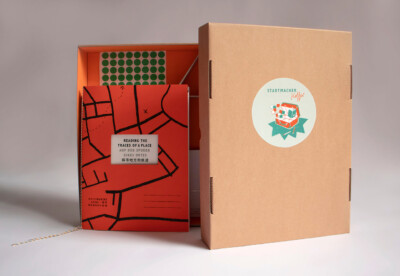
The STADTMACHER-Koffer is a toolkit designed by CITYMAKERS to deepen the dialogue between city-making enthusiasts from Europe and China – as well as all people who are interested in the topic of liveable cities in the Chinese-European context.
The CITYMAKERS Virtual Walks Project investigates fundamental themes of life in cities and on the countryside that are as relevant for people living in China as for those living in Berlin or any other European city. 20 people have taken part and created amazing video walks! Watch them here!
CITYMAKERS Knowledge-Hub: Aiming at understanding deeper the context of cities and urbanisation processes in China other than in Europe, we have generated various studies, recommendation papers, mappings, tools and more. See an overview on of our diverse print and e-publications here.
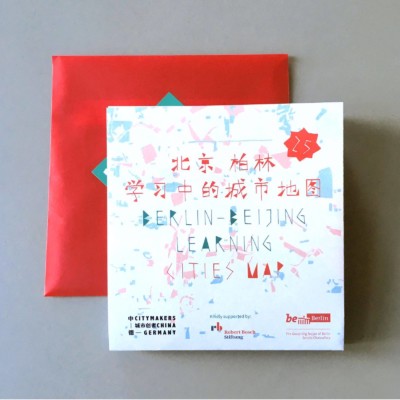
On the occasion of the 25th anniversary of city relations between Berlin and Beijing our CITYMAKERS-team developed a new framework for Sino-German twin cities to further learn and innovate for liveable city making.
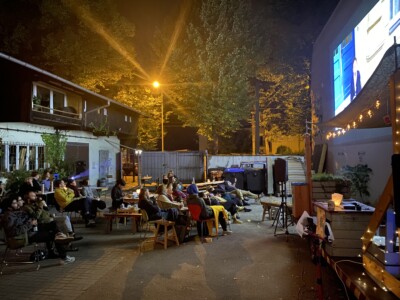
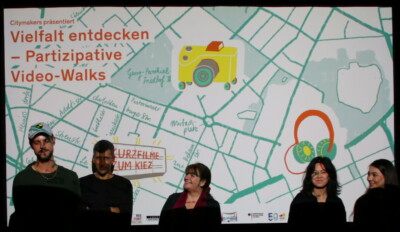
Mit Förderung des Fonds Soziokultur /Neustart Kultur präsentierte CITYMAKERS diesen Herbst in Berlin: “Vielfalt entdecken – Partizipative Video Walks”. Wir stellten die Fragen, “Was für interessante und vor allem vielfältige Geschichten von Menschen und Orten gibt es in unserem jeweiligen Kiez? Was macht Vielfalt aus?” 5 engagierte Künstler*innen und gesellschaftlichen Akteur*innen haben diese Fragen durch tolle filmische Stadtspaziergänge beantwortet und wir möchten sie hier zeigen!
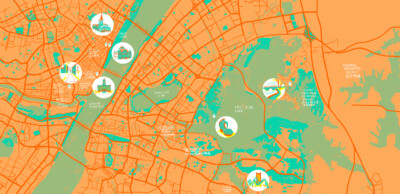
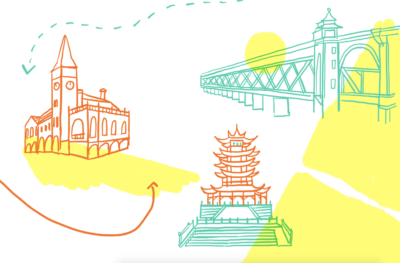
Das multimediale Wechselspiel von Keep Wuhan Walking – bestehend aus Audio-Atmosphären, Reportagen, Essays und wissenschaftlichen Einordnungen – führt die Flanierenden digital durch Wuhan – ob vor dem Bildschirm, im Lesesessel oder unterwegs über Kopfhörer.
The multimedia interplay of Keep Wuhan Keep Online Magazine – consisting of audio atmospheres, video impressions, reports, essays and scientific writings – guides you as strollers through Wuhan digitally – in front of the screen at home or on site in Wuhan.
A kiosk that doesn’t sell but shares – that’s how the project Sharing to Empower began. It explored how newly arrived people from Ukraine in Berlin invent their own forms of sharing and how these practices can create a sense of belonging, help build community, and help shape a new urban environment.
Anleitung von Silvia Cherneva, Inspektorin für die Bespielbarkeit öffentlicher Räume und Mitglied der Vereinigung unabhängig spielender Bürger:innen im erwerbsfähigen Alter
Bewohner*innen Wuhans haben ihre Lieblingsrouten und -Orte innerhalb des Stadtraums festhalten können – als Begehung des Stadtraums aus dem
Exil der eigenen Wohnung während des massiv einschränkenden Notstandes.
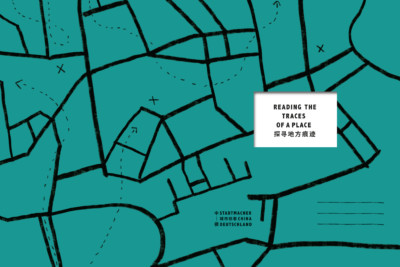
What are the topics and objects that catch your interest in the PLACE? Why? How are you interacting with the place? How are people using the place? CITYMAKERS China – Germany´s WU Yimeng and Katja Hellkötter co-created a booklet – Reading the Traces of a Place 读书地方的痕迹 – as a tool for an alternative spatial cognition.